

Impact of short-term rentals in France
A study by Strategy&, part of the PwC network
This study identifies the factors that have led to the housing crisis in France and assesses the impact of short-term rentals (Locations Meublées de Tourisme – LMT). It highlights the overall imbalance between supply and demand for housing over the past 15 years. The highest ever housing prices combined with the lowest purchasing power for real estate (cf. interest rates on loans) and strong regulatory constraints (e.g., environmental standards) are the main causes of tension in the housing market. It is important to note that the analysis is carried out by type of territory (coastal, mountain, rural, large cities); The weight of LMTs is analyzed and does not exceed 0.2% of the housing stock in France in 2022 (0.4% in large cities). Another important parameter is highlighted: dedicated LMTs (by professionals) represent only 8% of the total LMT stock.
The needs that LMTs meet are highlighted (hotel undercapacity, tourist consumption habits, network of supply in the absence of hotels – LMTs are present in more than 29,000 municipalities in France).
Contrary to popular belief, vacant (abandoned/unoccupied) housing in France weighs 41 times more than dedicated short-term rentals (this factor is still 15 in Paris!), so their impact must be put into perspective!
The study recommends increasing the construction of new housing.
October 2024
Regulating Short-Term Rentals: Towards Data-Driven Policymaking?

Assessment of the May 8, 2014 ordinance on tourist accommodation
Selected excerpts:
§ 3.1.3. A marked contrast between supply and demand (pg.10)
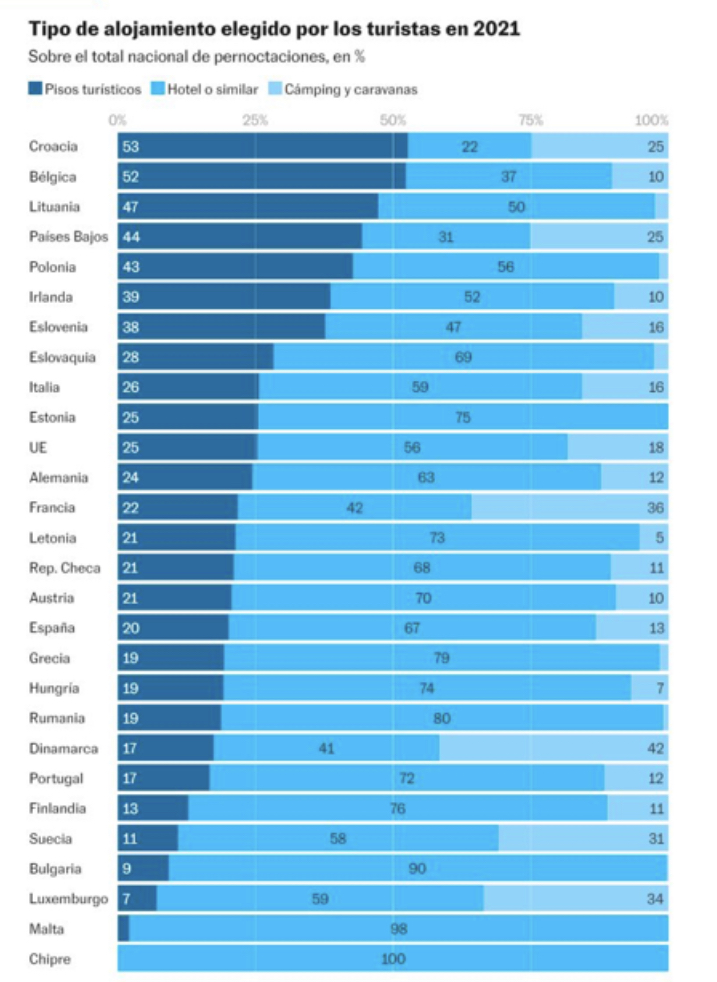
While the rise of online booking platforms has led to an increase in the number of tourist accommodation establishments and sustained growth in the sector's capacity, it has not yet challenged the very high concentration of overnight stays in the more traditional segments of the market.
§ 3.1.4. A high spatial concentration of supply (pg. 13) The concentration of short-term furnished rentals
in the tourist hypercenter is coupled with an
expansion into adjacent neighborhoods with few hotels and tourist facilities, and even into peripheral areas located away from tourist routes.
§ 4.2. Massive under-reporting compared to the real market (pg. 16)
§ 4.4. Urban planning compliance subject to interpretation (pg. 17)
In this light, making an economic authorization (the operation of tourist accommodation) dependent on a certificate issued in another field (urban planning) is more than legally unorthodox.
...
May 8, 2024